Stripes have long been a staple of great interior design, and they show no sign of going out of fashion.
Their popularity can be traced back to the 18th century, when striped fabrics first became fashionable in interiors. The Regency period embraced bold vertical stripes, while the 1920s saw larger-scale, more dramatic interpretations. In the 1930s they continued to evolve, where the classic ticking stripe emerged, bringing a timeless elegance that remains popular today. By the 1970s, stripes had taken on a more playful character, with vibrant colours, bold contrasts and wavy lines giving a fresh personality to the humble stripe.
Today, there is an endless variety of striped designs available for interiors, each capable of adding depth, character and visual impact to a space.
Vertical stripes are particularly effective at drawing the eye upwards, helping to create a sense of height and grandeur. Whether bold and dramatic or soft and delicate, they can make a room feel taller while highlighting architectural details, furniture or focal points within the space. A similar effect can be achieved on the floor, where striped runners and rugs guide the eye through a room and create a sense of movement.
Horizontal stripes, on the other hand, can visually widen a space and often bring a calm, balanced feel to a room.
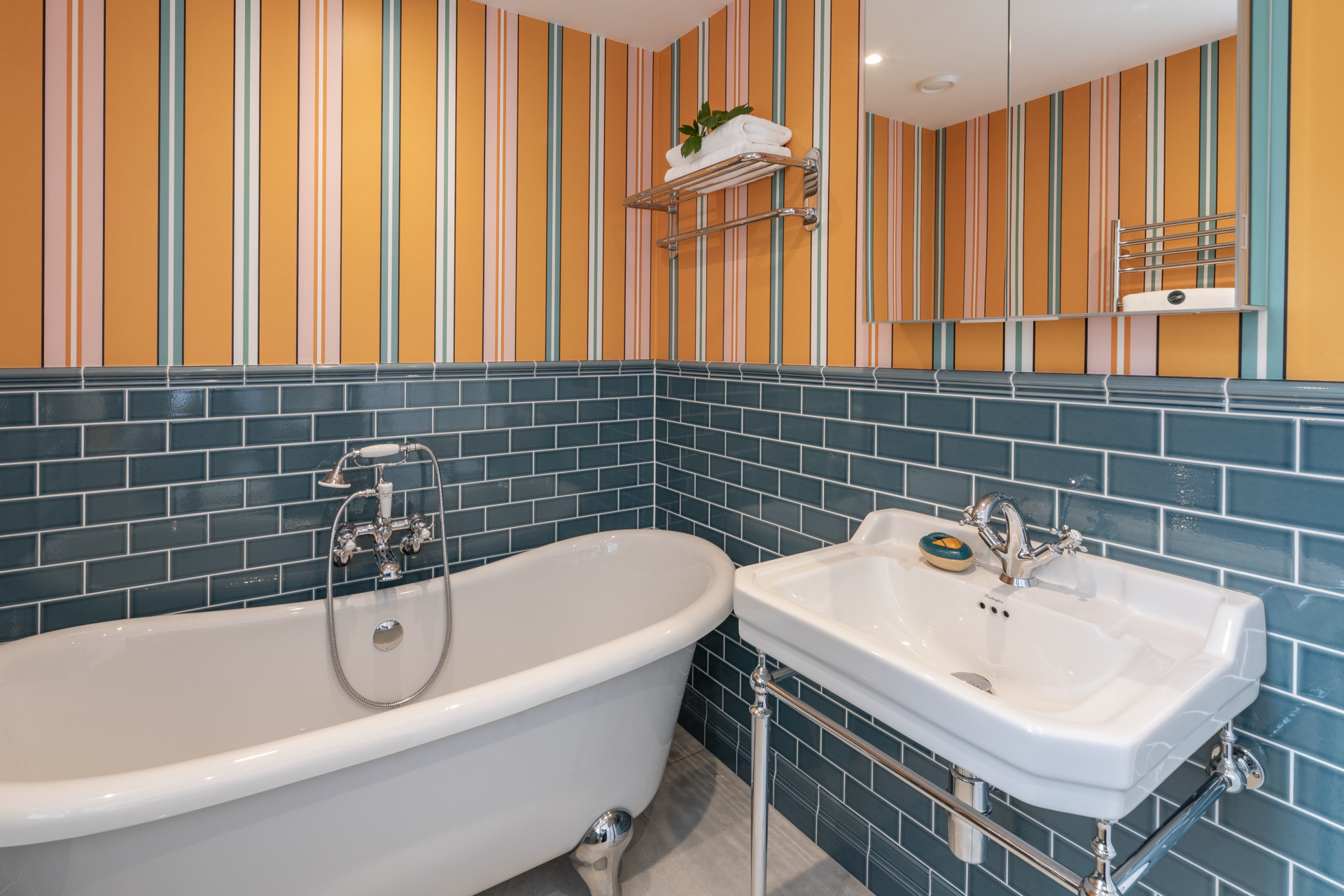
As with any pattern, colour plays an important role. The shades you choose can dramatically influence the mood and character of a space. In this bathroom, we opted for a bold colour palette, but the classic nature of the striped design ensures it sits beautifully alongside the more traditional furniture and fittings.
Timeless, versatile and endlessly adaptable, stripes are a design classic that continues to evolve. Whether used subtly or as a statement feature, they are a wonderful way to bring personality and interest to your home.